

TL;DR
- Choose a pricing model that matches usage patterns: API-call pricing for unpredictable, high-volume inference; per-seat for collaborative workflows; subscription for predictable consumption; outcome-based when you can measure business impact.
- Watch hidden costs: fine-tuning, data storage, cross-region egress, and training footprints often drive surprise charges.
- Design pilots with caps, sampling, and throttles; negotiate commitment discounts, hard caps, and overage protections.
- Use side-by-side TCO scenarios to compare API pricing vs subscription AI for your workload; include regional tax and egress differences.

The following ai pricing models comparison shows how each billing approach maps to real workloads and procurement realities for website owners, marketers, and developers. You’ll get clear examples, a pilot checklist, negotiation levers, and two artifacts you can copy: a side-by-side comparison table and a negotiation checklist. This piece assumes you’ll evaluate vendor pricing pages (many list USD rates) and ask vendors about currency, VAT, and regional cloud egress costs before signing.
Who this is NOT for
This guide does not apply if you cannot measure expected outputs or KPIs for your AI workloads, if you plan only one-off manual evaluations, or if your organization cannot accept recurring cloud costs. Do not use outcome-based pricing if outcomes are subjective or unverifiable. If you only need a one-off academic experiment with no production intent, a paid production contract is likely unnecessary.
Overview of common AI pricing models
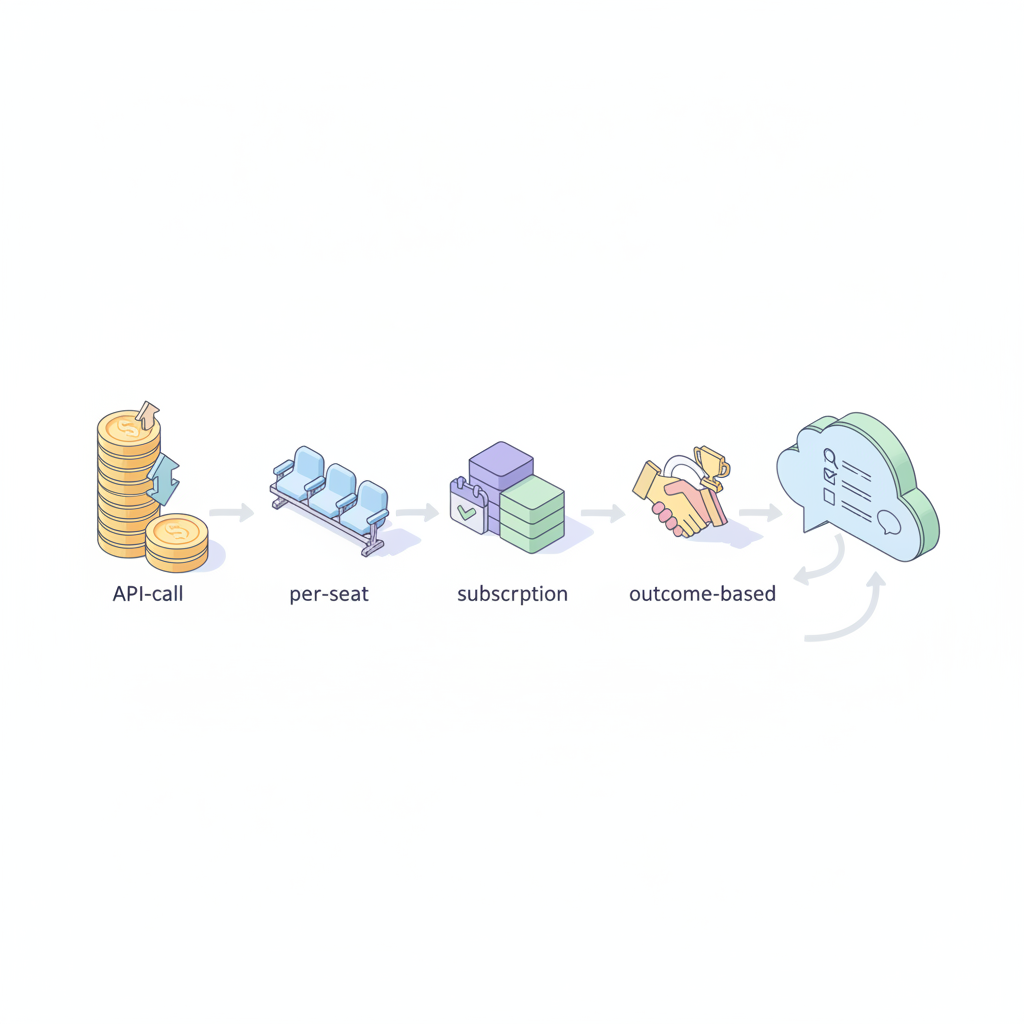
ai pricing models comparison should start by naming the common approaches: API-call (per-inference), per-seat (per-user), subscription/tiered, and outcome-based (pay for business results). Each model maps differently to cost predictability, usage spikes, and negotiation style. For more on this, see Ai contracts negotiation.
Example specifics: API-call pricing charges per token, request, or image processed and suits programmatic integrations. Per-seat ai pricing charges a flat fee per named user and suits teams using a hosted product. Subscription/tiered pricing bundles features and quotas into monthly or annual plans. Outcome-based ai pricing ties payment to agreed KPIs — e.g., lead conversion uplift or error reduction.
An AI pricing model must match your predictability needs: predictable spend needs subscription caps; variable inference needs per-call billing with caps.
When API-call pricing makes sense (use cases, pros and cons)
API-call pricing fits programmatic workloads where calls scale with traffic and you can instrument usage. Use cases include chatbots handling variable user volumes, image processing pipelines, or A/B test backends that call models per request. Pros: you pay for actual usage and can scale down to zero. Cons: unpredictable spikes, potential bill shock, and per-request costs that outstrip subscriptions for steady high-volume workloads.
Concrete example: an ecommerce site that calls a product-recommendation model on each page view may see cost per 1,000 calls add up quickly during promotions. A rule of thumb decision rule: if expected steady-state monthly inference volume exceeds the vendor's listed subscription quota (or your break-even point), a subscription or committed-usage discount is likely cheaper. When comparing api pricing vs subscription ai, model your monthly call counts and include estimated token or image sizes to calculate costs.
When per-seat or per-user pricing is better for teams
Per-seat ai pricing works when collaboration and per-user support are the dominant value drivers: content teams, CRM users, or analysts who run queries inside a hosted UI. This model simplifies budgeting—finance knows headcount times unit price—and aligns incentives for adoption because each seat is a wallet-sized commitment.
Actionable threshold: choose per-seat if >60% of your cost is driven by user accounts rather than API volume, or if your users run manual tasks that don't translate into per-call metrics. For example, a marketing team of 10 using an AI writing assistant inside a SaaS app may prefer per-seat ai pricing to avoid metered API bills and to get admin features and SSO that vendors often include in seat plans.
Per-seat pricing can backfire when power users generate most costs; ask vendors about rate limits, usage quotas, and how they handle heavy users within a seat model.
Subscription and tiered models — predictability vs flexibility
Subscription and tiered models bundle compute, access, and support into predictable monthly or annual fees. They’re ideal when you need predictable budgets, regular updates, and known quotas. Choose tiers based on expected usage bands: starter, growth, and enterprise. Subscriptions often include feature gates—higher tiers unlock greater throughput or fine-tuning credits.
When deciding between api pricing vs subscription ai, compare the effective unit price at your projected scale. Example scenarios: a small team pilot might cost roughly $500–$1,500/month on a subscription, while enterprise API usage could be several thousand dollars monthly unless you negotiate committed discounts. Always ask vendors if subscriptions convert to metered billing for excess usage or if hard caps apply.
Predictable spend requires subscription caps and committed discounts; unpredictable workloads require metering plus hard caps.
Outcome-based pricing and risk-sharing arrangements
Outcome-based ai pricing ties fees to measurable business results such as increased conversion rate, reduced support tickets, or saved agent minutes. This model transfers implementation risk to the vendor but requires clearly defined, auditable metrics and baseline measurements. Use it when outcomes are quantifiable and you can isolate the AI’s contribution.
Example contract artifact: agree on baseline KPI measurement period (30 days), success criteria (e.g., +2% conversion lift), measurement methodology, and a payment schedule (partial upfront, remainder on verified outcome). Outcome-based ai pricing works well for vendors that can instrument results and for buyers who can remove confounding variables.
Hidden cost drivers to watch (fine-tuning, data storage, inference vs training)
Hidden costs are the main source of bill shock. Common drivers: fine-tuning charges (compute + storage), long-term data storage (logs, training datasets), separate fees for training vs inference, and cross-region egress costs. Regional differences matter: EU data centers often have higher egress and storage pricing, and VAT on digital services can add a tax layer. Ask vendors whether listed USD prices include VAT or whether you'll be billed net of local taxes.
Concrete thresholds and checks: require P95 latency targets (for typical SaaS apps aim for under 300ms) and ask for separate estimates for training GPU hours vs inference GPU hours. Example: fine-tuning a base model can cost thousands of dollars in compute; treat fine-tuning as a capital expense and model storage and monitoring as recurring OS costs.
Negotiation levers (commitment discounts, caps, overage protections, quotas)
When negotiating, ask for these levers: committed volume discounts, hard monthly spend caps, overage protections (discounted rates after threshold), and quotas per API key or per seat. Negotiate currency and tax treatment—many vendors list USD prices but will bill local currency with VAT applied.
Specific asks to make: a 12-month committed usage discount in exchange for a reduced per-call rate, a hard cap that prevents charges above an agreed amount without written approval, and a rollback clause for sustained underuse. Also insist on transparent metering reports and daily usage logs to audit charges.
Designing a pilot with cost controls
Design pilots to prove value while controlling spend. Steps: (1) define 3-week scope and KPIs, (2) set a hard spend cap (example: $1,000 pilot cap), (3) sample representative traffic rather than full production traffic, (4) implement throttles and sampling (e.g., 10% of requests), and (5) collect cost and performance telemetry daily. This plan gives you the data to decide how to scale or renegotiate.
Monitoring usage and setting alerts
Monitor usage with automated alerts: set threshold alerts at 50%, 75%, and 90% of monthly quota or cap. Track token counts, API latency (P95), and error rates. Example alert rules: notify engineering at 75% of quota and trigger an automatic throttle at 95% to prevent overage. Ensure logs include request identifiers for forensic billing audits.
Example TCO scenarios and side-by-side cost comparison
Below is a simplified comparison table you can copy to model your own TCO. Replace ballpark numbers with vendor quotes and regional tax estimates.
| Scenario | Model | Estimated monthly cost | Notes |
|---|---|---|---|
| Small team pilot (10 users) | Per-seat | $800 | Includes seats, admin features; minimal API calls |
| Steady API inference (ecommerce) | API-call | $6,000 | High request volume; consider committed discounts |
| Enterprise ML pipeline | Subscription + outcome | $20,000+ | Includes training, fine-tuning credits, and SLA |
These are example scenarios. When you build your own TCO, include regional egress and storage multipliers (EU ~1.1–1.3x storage/egress compared with some US regions) and add expected VAT where applicable.
Contract clauses to protect buyers from bill shock
Insist on these clauses: hard spend cap, monthly reconciliations with detailed usage logs, price review windows, and clear definitions for billable events (what counts as a token, request, or training hour). Also require incident credits for unplanned outages and an export clause allowing you to retrieve your data in standard formats without extra fees.
Ask for an audit right to review metering for a short period after onboarding (30–90 days) and negotiate remediation for billing errors found in audits. Put dispute resolution and escalation paths into the SOW.
Recommended negotiation checklist
Use this checklist during procurement rounds; adapt items to your procurement policy. For more on this, see Ai tool procurement.
- Request price sheet showing per-call, per-seat, subscription, and training rates.
- Ask for committed usage tier discounts and sample discount math for 12 months.
- Negotiate a hard monthly cap and overage rate protections.
- Require daily usage exports and monthly reconciliations.
- Clarify currency, VAT, and regional egress/storage pricing.
- Define KPIs, measurement windows, and audit rights for outcome-based terms.
- Include data export and termination terms without punitive fees.
Frequently asked questions
What is comparing ai pricing models? ai pricing models comparison is the process of evaluating billing approaches—API-call, per-seat, subscription, and outcome-based—against your workload, predictability needs, and procurement constraints to choose the most cost-effective model.
How does comparing ai pricing models work? Comparing models involves mapping your expected usage (calls, seats, training hours), modeling regional taxes and egress/storage costs, running side-by-side TCO calculations, and testing assumptions with a capped pilot before committing long term.