

TL;DR
- Build an ai tool privacy scoring metric that weights legal alignment, technical controls, and operational evidence.
- Score domains: collection, storage, processing, sharing, plus data residency and retention controls.
- Use concrete evidence—SOC 2, ISO 27001, DPIA summaries, subprocessors list—before production use.
- Apply an ai vendor privacy rubric with red/amber/green thresholds and escalate risks with clear decision rules.

Introduction: A privacy/compliance score blends legal alignment (GDPR/CCPA), technical controls (encryption, access control), and operational evidence (audits, DPIAs) into a single weighted metric you can apply across AI tools. Website owners, marketers, and developers building a shortlist on xproductlist.com will use this approach to compare vendors consistently and flag risk before procurement.
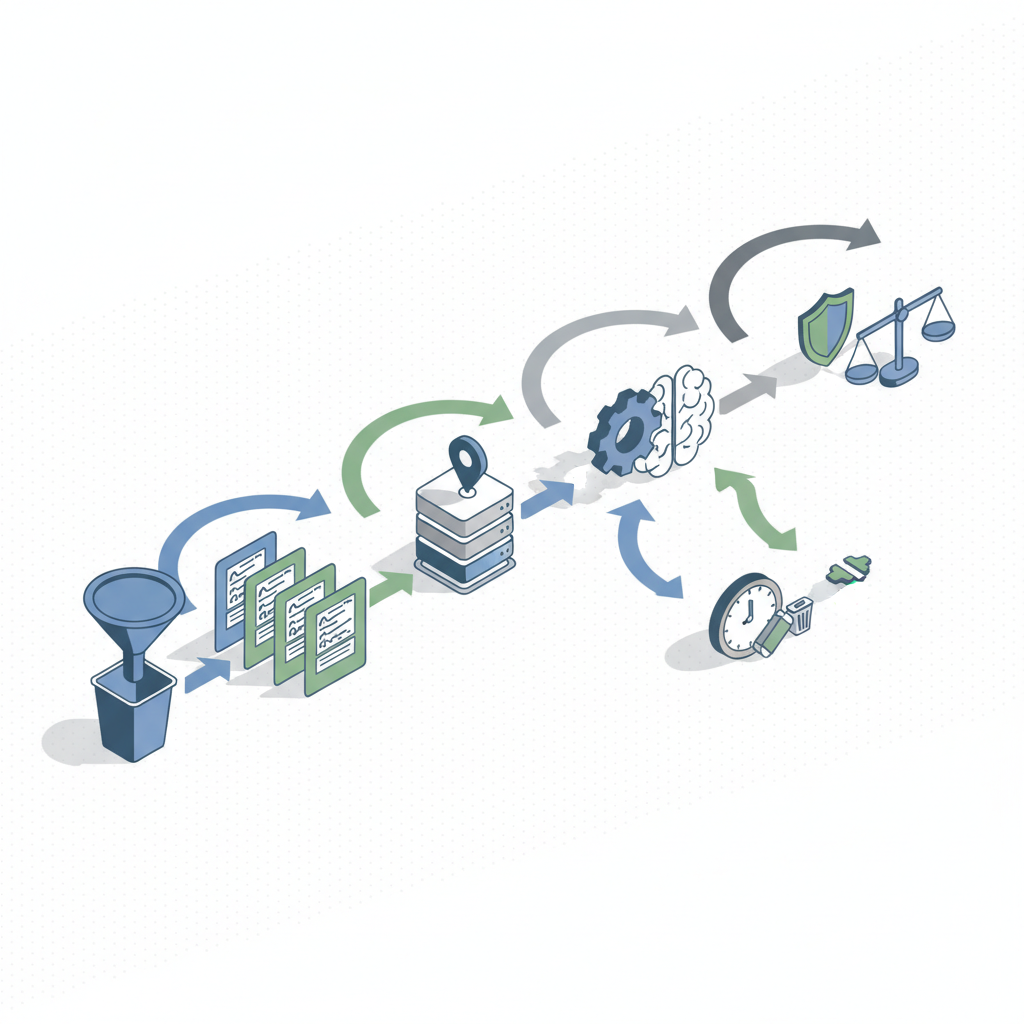
Who this is not for
This guide is not for teams that need bespoke legal opinions, firms processing highly regulated data without in-house counsel, or projects that cannot document any vendor evidence. If you cannot obtain vendor attestations or your use case involves classified data, the scoring approach below needs modification by legal and security professionals, particularly in light of the principles outlined in operational and security scoring for AI tools.
Why privacy & compliance scoring matters when evaluating AI tools
AI products often process large volumes of user data and make automated decisions. Without a repeatable ai tool privacy scoring method you’ll compare vendors on features but miss compliance gaps that create real liability. A score converts complex controls into decision-ready inputs: procurement can set a minimum threshold, product teams can require mitigations, and legal can demand contract clauses. For example, when a marketer integrates an AI transcription tool, the score flags whether transcripts are sent to third-party models, retained indefinitely, or stored in a non-EU region—each of which changes contractual and technical requirements. For more on this, see Ai product evaluation framework.
Quotable: "A privacy/compliance score blends legal alignment, technical controls, and operational evidence into a single weighted metric."
Key privacy domains to score (data collection, storage, processing, sharing)
Score these four foundational domains separately before aggregating: data collection (what is collected and consent basis), storage (encryption, segmentation), processing (models, training, inference), and sharing (subprocessors, exports, analytics). Use evidence tiers: vendor policy statements, technical documentation, and independent audit artifacts. For each domain, map required controls to regulatory expectations—e.g., collection maps to lawful basis under GDPR and opt-out rules under CCPA.
Score each domain independently; a green storage score cannot offset red-level sharing controls.
Data classification & minimization
Classify data up front: public, internal, personal data, sensitive personal data. Minimization requires you to record what fields an AI tool ingests and to reject tools that require unnecessary identifiers. Example action: when evaluating an image-labeling tool, require that PII fields (email, SSN) are redacted client-side before upload. Practical threshold: reject vendors that ingest unredacted sensitive PII for non-essential features.
Data retention & deletion policies
Retention rules should be explicit and enforceable. Score retention on clarity (policy exists), control (configurable retention windows), and proof (deletion logs, API methods for erasure). Example: prefer tools offering configurable retention under 30 days for user-generated content. Require a documented deletion API and retention SLA in the contract.
Data residency & cross‑border transfer controls
Data residency can change legal obligations. Score whether vendors host data regionally, offer EU/UK-only storage, and use standard transfer mechanisms. For data residency ai tools, require region-selection controls for EU data and subprocessors that operate in jurisdictions with comparable protections. If your users are in the EU, a vendor that routes data through the U.S. without SCCs (or equivalent assurances) should score poorly.
Compliance checkpoints: GDPR, CCPA & emerging regional rules
Map your score to specific regulatory checkpoints. For GDPR, validate lawful basis, data subject rights, data protection by design, and Article 32 security measures. For CCPA ai compliance, confirm notice at collection, the ability to opt out of selling/sharing, and vendor contractual obligations that treat vendors as service providers when appropriate. For APAC or state-level US rules, score based on data residency and consent mechanisms documented by local regulators.
Quotable: "Treat SOC 2 and ISO 27001 as evidence, not proof; verify scope and supporting artifacts."
Practical mapping: which GDPR articles to check (e.g., Article 32)
Check Article 32 (security of processing) for encryption, access control, and testing. Verify Article 28 (processors) via a signed DPA and subprocessors list. For automated decision-making, review Articles 13–15 on information notices and Articles 22–23 for profiling restrictions. Record the article number beside each control in your scoring sheet to make legal reviews efficient.
CCPA consumer rights & vendor obligations
Under CCPA, confirm the vendor supports consumer rights: access, deletion, and portability where applicable. Ensure vendor contracts include obligations on data use and prohibitions on unauthorized selling. Score vendors lower if their processing model relies on advertising identifiers or data sharing that conflicts with consumer opt-out signals.
A simple scoring rubric (weights, thresholds, evidence types)
Create a weighted rubric combining three pillars: legal alignment (40%), technical controls (35%), and operational evidence (25%). Legal alignment covers DPAs, notices, and rights support. Technical controls cover encryption (in transit and at rest), role-based access, and key management. Operational evidence includes SOC 2/ISO 27001 reports, penetration test summaries, and a DPIA or privacy risk assessment. Use numeric scores (0–10) per subdomain and multiply by weights to get a 0–100 final score.
Require a minimum production score (for example, 70/100) and list compensating controls for borderline vendors.
Example scoring template with weighted criteria
Use a simple table as an artifact and duplicate it in procurement docs. Below is a compact example you can copy into a spreadsheet.
| Domain | Weight | Score (0–10) | Weighted |
|---|---|---|---|
| Legal alignment (DPA, notices) | 0.40 | 8 | 32 |
| Technical controls (encryption, access) | 0.35 | 7 | 24.5 |
| Operational evidence (audits, DPIA) | 0.25 | 6 | 15 |
| Total | 71.5 |
Red/amber/green thresholds and when to escalate
Adopt clear decision rules: Green >= 75 — proceed; Amber 60–74 — require remediation plan and contractually enforceable milestones; Red < 60 — reject or sandbox only with strict compensating controls. Escalate amber cases to legal and security with a list of required artifacts and a 30–90 day remediation window.
How to validate vendor claims (logs, audits, certifications)
Document the evidence you accept: access to recent SOC 2 Type II report (with scope), ISO 27001 certificate plus scope document, redacted penetration test summaries, and sample logs showing deletion events. Request evidence of controls in production, not just development. For high-risk processing, ask for a recent independent audit or a signed attestation of controls from the vendor’s CISO.
What to request: SOC2, ISO 27001, DPA, DPIA summaries, subprocessors list
Always request a DPA and subprocessors list before signing. Ask for SOC 2 Type II or ISO 27001 plus the scope statement. For AI models that train on customer data, request a DPIA summary or a privacy risk assessment and a description of model update and retention practices. Require subprocessors to be named or, if not possible, a clear process for notification and objection.
Integration checklist for legal, security and product teams
Use a short checklist to align stakeholders before procurement. This checklist is a reusable artifact that keeps reviews consistent across vendors and teams.
- Confirm DPA signed and subprocessors disclosed.
- Verify SOC 2/ISO 27001 scope covers relevant services.
- Check data residency options for EU/UK/APAC needs.
- Confirm deletion API and retention policy exist.
- Document remediation steps for amber scores.
Questions to ask during procurement and vendor demos
Ask: Where is the data stored and can we select region? Can you provide a subprocessors list and recent SOC 2 report? Do you support deletion via API and provide deletion logs? Which data fields are used for training models? These direct questions force vendors to produce evidence you can score.
Quick-win actions for 90‑day evaluation programs
Run a 90-day pilot with these quick wins: (1) score vendors using the rubric and require a minimum threshold, (2) collect documentation (DPA, SOC 2, subprocessors), and (3) run a privacy impact assessment on a representative dataset. For pilots, set retention to the minimum (e.g., 7–30 days) and enable pseudonymization where possible. At 60 days, review logs and confirm deletion behavior—if deletion cannot be proven, pause rollout.
Conclusion: operationalizing privacy scores in your AI tool shortlist
Operationalize privacy scoring for ai by embedding the ai vendor privacy rubric into procurement templates and xproductlist.com comparison rows. Require evidence before production and enforce red/amber/green thresholds with clear escalation. Privacy scoring for ai turns compliance from a checklist into a comparative metric that teams can act on.
FAQ
What does it mean to score data privacy & compliance for ai tools?
Scoring data privacy and compliance for AI tools means assigning a weighted metric that combines legal alignment, technical controls, and operational evidence to produce a single comparative score for procurement and risk decisions.
How do you score data privacy & compliance for ai tools?
Score by evaluating domains (collection, storage, processing, sharing), assigning numeric sub-scores, applying weights for legal/technical/operational pillars, and aggregating to a final score with red/amber/green thresholds and required evidence types.