
TL;DR
- Negotiate ai slas liability caps incident response terms that tie uptime, latency, and inference accuracy to credits and remediation.
- Use concrete thresholds: 99.9% uptime (~8.8 hours downtime/year), P95 latency <300ms, inference accuracy targets and drift alerts.
- Expect standard liability cap ranges of 1–3x annual fees or direct damages, with carve-outs for IP and privacy; require breach notifications in 24–72 hours (EU: 72 hours).
- Include an incident response clause ai vendor that defines timelines, forensics access, and escalation to avoid slow recoveries.

The primary concern when buying AI services is operational and legal risk: you must know what the vendor promises, what happens when those promises fail, and who pays for downstream harm. This guide covers ai slas liability caps incident response in practical terms for website owners, marketers, and developers. It explains common metrics, concrete thresholds, liability mechanics, incident response obligations, negotiation language, testing during pilots, and post-incident artifacts you can require.
When NOT to productionize AI models with vendor SLAs:
- No reliable evaluation metric exists for the core output (you cannot measure correctness).
- Data changes faster than you can retrain (model drift within days) and the vendor offers no retraining guarantees.
- The vendor refuses forensics access, audit logs, or data export — you cannot investigate incidents.
- Your application would cause irreversible physical, legal, or safety harms if outputs are wrong.
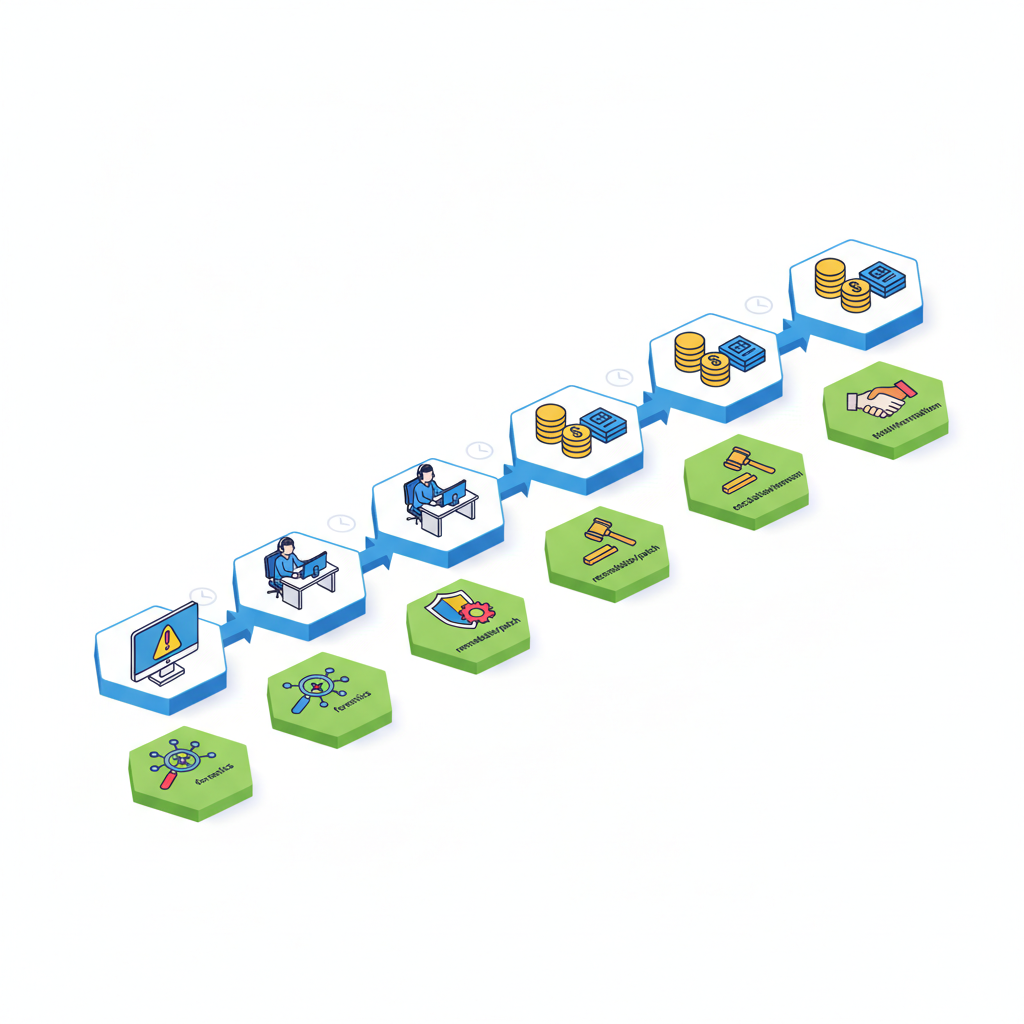
Why SLAs, liability and IR clauses are critical for AI purchases
If an AI feature breaks, the visible effect is not just downtime — it's bad UX, revenue loss, regulatory exposure, and brand harm. The phrase ai slas liability caps incident response bundles three controls: contractual performance promises (SLAs), limits on vendor financial exposure (liability caps), and obligations the supplier must follow after a problem (incident response clauses). Buyers who accept black‑box SLAs often get two surprises: unclear measurable metrics and too‑small financial remedies.
Example: a chatbot that answers billing queries going offline for 8 hours during peak season can cost more than monthly fees in lost conversions. Specify measurable metrics, credits, and remediation steps up front. A quotable fact: "An uptime promise without credits turns availability into marketing copy, not protection."
Define SLAs in measurable terms — availability, latency, and accuracy — before you integrate the system.
Common SLA metrics for AI products (uptime, latency, inference accuracy, model drift monitoring)
AI SLAs differ from generic cloud SLAs because they must include both infrastructure and model-level metrics. The typical metrics to demand are:
- Uptime — service reachable and accepting requests.
- Latency — e.g., P95 inference latency; a common target for interactive features is P95 < 300ms.
- Inference accuracy — measured against a signed test set or agreed benchmark (e.g., F1 > 0.80 on the accepted test set).
- Model drift monitoring — alerts when input distribution or prediction distribution shifts beyond a defined threshold (for example, KL divergence > 0.2 or accuracy drop > 5%).
Include metrics collection and reporting frequency (daily, hourly) and require access to logs and scoring outputs during incidents. Use the phrase ai sla standards when insisting on documented measurement methods and periodic audits — this prevents vendors from changing measurement windows post‑contract.
Typical uptime targets and credits (99.5% vs 99.9% vs 99.99%) and how to interpret them
Common enterprise uptime SLAs and their annual downtime equivalents give a quick way to compare vendors: 99.5% ≈ 43.8 hours/year; 99.9% ≈ 8.8 hours/year; 99.95% ≈ 4.38 hours/year; 99.99% ≈ 0.876 hours/year. Demand a clear credit schedule: for example, 99.9%–99.5% = 10% credit, 99.5%–99.0% = 25% credit, <99.0% = termination right plus 50% credit. These numbers are negotiable; the key is having objective remedies tied to downtime.
Also require definitions: "downtime" must exclude scheduled maintenance (with advance notice), force majeure, and customer misconfiguration. When buying commodity models the target might be ai vendor uptime sla at 99.9%; for mission-critical customer interfaces push for 99.95% or higher and faster incident responses.
Defining measurable service levels for model performance and availability
Translate business risk into measurable thresholds. A good decision rule: choose a threshold that limits customer-visible errors to an acceptable number per million requests. Example KPIs:
| Metric | Target | Measurement |
|---|---|---|
| Availability | 99.95% | Monthly uptime calculated as successful request count / total expected requests |
| P95 latency | <300ms | Measured on production traffic by region |
| Inference accuracy | F1 > 0.80 | Quarterly benchmark on agreed test set |
| Drift alerts | Notify when accuracy drops >5% | Daily drift report with examples |
Require that metrics are auditable: shared dashboards, raw logs, and the right to run a reconciliation test during a pilot. A practical artifact: a one‑page KPI spec attached as a contract exhibit that lists exact calculation formulas, measurement windows, and data sources.
Liability caps, indemnities and carve-outs (IP, privacy breaches, third-party claims)
Liability cap ai contract language sets the vendor's maximum exposure. Standard market range is often 1–3× annual fees for general breaches or direct damages, but buyers must insist on carve-outs: IP infringement, privacy breaches (personal data), and gross negligence should be uncapped or substantially higher. Also include indemnities for third-party claims arising from vendor code or model outputs, and require the vendor to control defense of such claims.
Regional note: some jurisdictions limit enforceability of blanket caps or require higher standards for consumer harms. For privacy incidents, reference the EU GDPR 72-hour breach notification requirement; include a contractual notification window of 24–72 hours and specific cooperation duties for regulatory responses.
Carve out IP and personal data breaches from liability caps; those harms create regulatory risk that credits won't fix.
Incident response and forensics: timelines, roles, and supplier obligations
An incident response clause ai vendor should define who does what and when. Minimum items to include:
- Notification window: vendor must notify within 24–72 hours of detection or knowledge (specify 24h if you operate in regulated sectors).
- Initial triage: vendor provides a preliminary incident report within 8 hours of notification and a remediation plan within 48 hours.
- Forensics access: buyer receives logs, model inputs/outputs, and reproducer scripts, with agreed redaction rules for sensitive data.
- Roles: named technical and legal contacts on both sides and an escalation path to senior vendor ops within defined timeframes.
Attach a runbook as a contract exhibit that spells out runbook steps and evidence the vendor must produce for RCA (root cause analysis).
Escalation paths, penalties, and termination triggers
Escalation clauses must be actionable: after missed SLA remediation deadlines, require automatic escalation to a named VP within 24 hours and a penalty schedule that increases with recurrence. Sample penalty ladder: first critical outage = service credit; second within 90 days = higher credit + vendor pays for third‑party recovery services; third = termination right for convenience with pro rata refund.
Termination triggers should include repeated SLA misses (e.g., >2 breaches in a 12‑month window), material breach of data protection duties, or refusal to provide agreed forensic artifacts. Ensure exit assistance: data export, model handover, and a 90‑day runout period where the vendor supports transition at a defined price or no extra charge.
Practical negotiation playbook and sample clause language
Negotiation moves that work: For more on this, see Ai contracts negotiation.
- Start from measurable KPIs and attach them as exhibits.
- Ask for a sliding credit schedule tied to specific calculations.
- Ask for carve-outs to liability caps and, if the vendor resists, get a higher indemnity for IP and privacy.
- Require an incident response exhibit: timelines, logs, and forensics access.
Sample clause snippet (condensed): "Vendor warrants monthly availability of 99.95%; if monthly availability < 99.95%, buyer will receive service credits per Exhibit A. Vendor will notify buyer within 24 hours of any security or privacy incident and provide an initial incident report within 8 hours and a full RCA within 15 business days." Use this decision checklist during negotiation:
- Agree KPI exhibits and measurement formulas.
- Define credit calculation and cap on credits.
- Specify liability cap and carve-outs.
- Include incident response timelines and forensics access.
How to handle model errors, bias incidents, and downstream harms
When model errors or bias incidents occur, require immediate containment, disclosure, and remediation steps in the contract. Containment could mean disabling the model endpoint or routing traffic through a human review queue. For bias incidents, require a third‑party audit if internal remediation fails, and set repair obligations: retraining timelines, rollbacks, and monitoring windows. For downstream harms (fraud, reputational loss), require vendor cooperation in mitigation and a negotiated compensation approach tied to measurable harm. A usable clause: mandate root cause analysis, corrective training within 30 days, and post‑remediation monitoring for 90 days.
How to test and validate SLA compliance during pilots
Use pilots to validate ai sla standards and operational behaviour. Pilot checklist:
- Run a production‑like workload for at least 14 days across expected traffic volumes.
- Measure P95 latency, error rates, and accuracy against a reserved test set; require vendor to run the same measurements.
- Exercise incident scenarios: simulated outages, data distribution shifts, and rapid request bursts.
- Validate logging and reproducibility: can the vendor reprocess an input to reproduce an output?
Require that pilot results be captured in a signed acceptance memo that becomes an exhibit to the final contract. Example target: P95 latency < 300ms on pilot traffic of 1k RPS for interactive features.
Post-incident requirements: root cause analysis, remediation, and monitoring
After an incident, contractually require a documented root cause analysis (RCA) delivered within 15 business days, a remediation plan with timelines, and increased monitoring for a defined window (typically 90 days). The RCA should include:
- Timeline of events and evidence (logs, inputs, outputs)
- Technical cause (code, config, model drift, data issue)
- Corrective actions and verification steps
Require that the vendor bears the cost of third‑party audits if the incident stems from vendor code or model training data. A quotable sentence: "An RCA without raw logs is a guess, not evidence."
FAQ
- What is sla, liability caps and incident response clauses for ai?
- They are contractual elements that define service performance guarantees (SLAs), limits on vendor financial liability (liability caps), and the vendor's obligations for detection, notification, and remediation after incidents (incident response clauses).
- How does sla, liability caps and incident response clauses for ai work?
- Buyers negotiate measurable SLAs (availability, latency, accuracy), agree remedies such as service credits, set liability caps with carve-outs for IP and privacy, and include incident response timelines and forensics access to ensure timely remediation and accountability.
References
- Artificial Intelligence Risk Management Framework: Generative AI Profile (NIST)
- Regulation - EU - 2024/1689 (EUR-Lex)
- AI Act draft guidance on serious AI incidents (European Commission)